Tag: #product design
5 Bookmarks
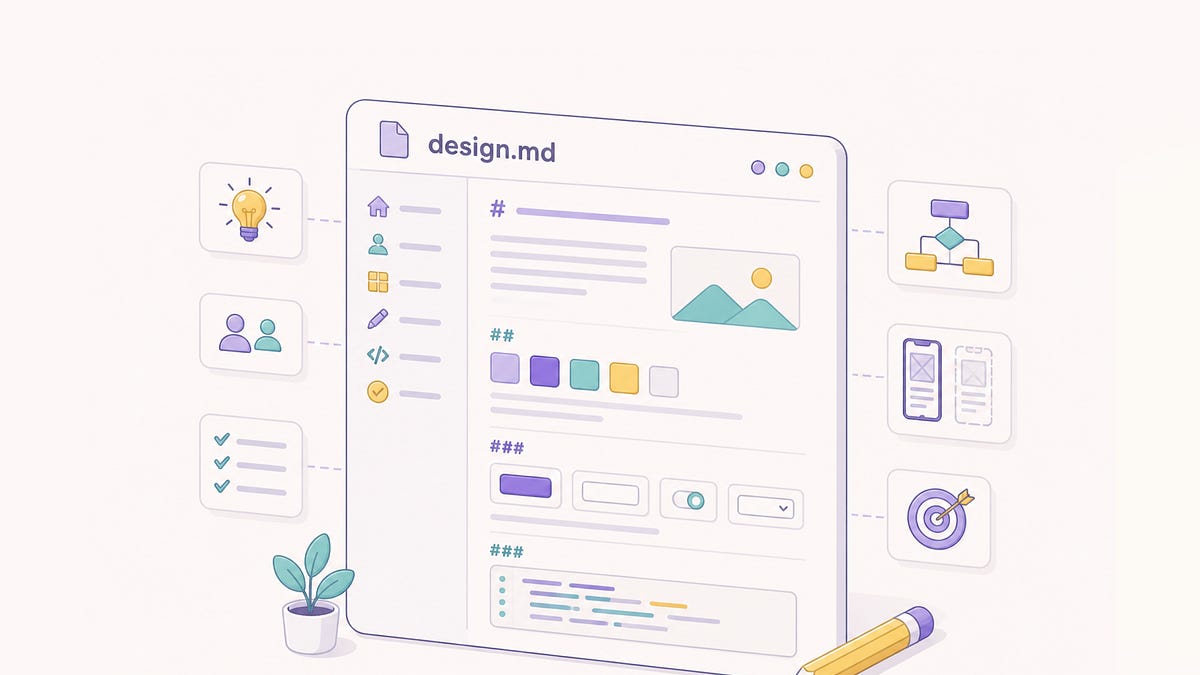
Writing a DESIGN.md file Claude can actually use
This article explores how to write effective DESIGN.md files for AI tools like Claude. The author found that simply listing design tokens is insufficient; files need to include context, intent, and constraints. Building a DESIGN.md from scratch revealed the importance of a product brief and explicit "don'ts" for the system. Claude can extract design tokens accurately but struggles with the reasoning and strategic "why" behind design decisions. Ultimately, a well-crafted DESIGN.md requires designer input for its rationale, not just token extraction.
Accelerating Creation, Powered by Roblox’s Cube Foundation Model | Roblox
Roblox is introducing 4D generation, powered by its Cube Foundation Model, which adds interactivity to 3D objects. This technology allows players to generate functional objects like cars that can be driven using simple text prompts. Developers are already seeing increased player engagement and playtime with this feature. The system uses "schemas" to define object parts and behaviors, enabling dynamic functionality. Roblox plans to expand this to generate entire scenes and more complex interactive elements through natural language prompts.
psychology in design the zeigarnik effect a59317503f8f - uxdesign.cc
This text indicates that the content originates from uxdesign.cc. This source is a platform dedicated to user experience (UX) design. Therefore, the content likely focuses on topics related to UX principles, best practices, case studies, and industry insights. Readers can expect to find articles, tutorials, and discussions aimed at improving the design of digital products and services. The content is intended for designers, researchers, product managers, and anyone interested in creating user-centered experiences.
Welcome to Obvious University! | Obvious University
Obvious University is a public collection of how-to guides for building digital products and fostering a positive company culture. It covers topics including product strategy, user research, AI integration, design principles (typography, microcopy, design systems), mobile engineering, and project management. The resources are intended for employees, potential hires, and anyone interested in product development. The university emphasizes practical application and is based on Obvious's core values of curiosity, craft, and compounding. It aims to create a collaborative environment and improve individual and collective output.

Vanity Metrics vs Actionable Metrics - Lean Startup | Boldare - Digital Product Development & Design Company
This Boldare blog post by Adam Ziemba discusses the importance of distinguishing between vanity and actionable metrics in lean startup methodology. Vanity metrics, like website hits, offer superficial data, while actionable metrics, such as sales figures, provide useful insights for product improvement. The article emphasizes the Build-Measure-Learn cycle and how actionable metrics guide decision-making throughout this process. Using actionable metrics improves team performance and product development, unlike vanity metrics which can hinder progress and create conflict. Boldare uses this approach, illustrated by a case study of their own company's development.